Music Production MAGIC
Get your FREE download of my 50 magic moves that will make your songs, recordings and mixes sound better instantly.
Give me the MAGIC 🪄
When Digital Sound Had Teeth
Before soft synths.
Before endless presets.
Before “vintage mode” buttons.
There was wavetable synthesis — cold, metallic, alive.
And at the center of that story sits the Waldorf Microwave and its bright-orange descendant, the Microwave XT.
These weren’t polite synth...

Renting vs Owning Your Studio
“Price is what you pay. Value is what you get.”
— Warren Buffett
For decades, buying studio gear was simple.
You bought it.
You owned it.
You used it forever.
But audio plugins changed the rules.
Today you’ll see three different models:
-
Subscription
-
Own F...
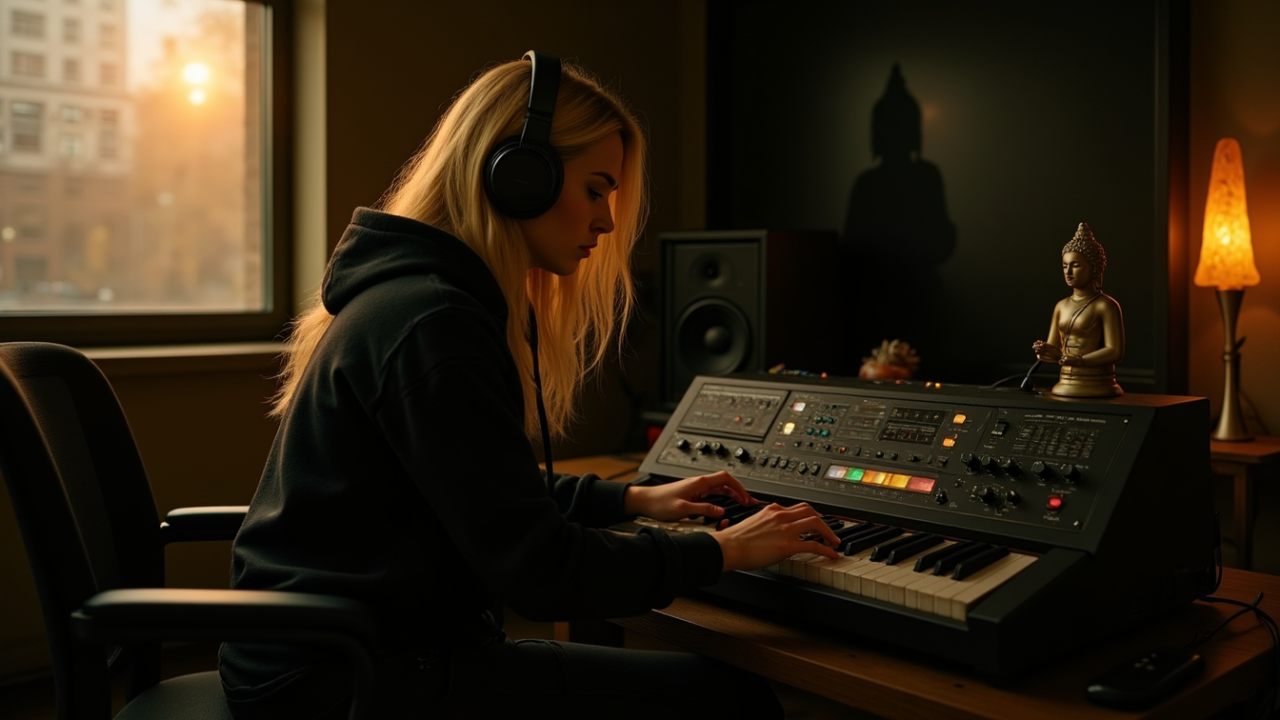
When a Synth Learned to Breathe
Most synthesizers generate sound.
The CS-80 performed.
It didn’t just respond to notes —
it responded to pressure, movement, and intention.
That’s why, decades later, the CS-80 still feels less like a machine
and more like a living instrument.
Quick Summary
...
Decibels Don’t Measure Sound
They measure relationships.
Every dB value is answering the same question:
“Louder than what?”
If you don’t understand the reference, the number means nothing — and most gain-staging problems start right there.
Quick Summary
👉 Decibels are relative measure...

The DAW Question Everyone Asks
At some point, every producer asks the same question:
“Should I learn Pro Tools or Ableton Live?”
Both are powerful.
Both are professional.
Both can make great music.
But they were built for different worlds, with different priorities, and different types of creato...

One Oscillator. Infinite Records.
The SH-101 shouldn’t be legendary.
On paper, it’s almost boring.
-
one oscillator
-
one filter
-
one envelope
-
one LFO
And yet…
This little plastic synth ended up on countless classic records, shaped entire genres, and became one of the most cop...

Sound Is Just Shaped Electricity
“Everything should be made as simple as possible, but not simpler.”
— Albert Einstein
Synthesis can look complicated.
Oscillators.
Filters.
Modulators.
Algorithms.
But underneath it all, a synthesizer does one thing:
...It shapes raw energy into musical tone.

This Debate Won’t Die
Analog vs Digital.
Warm vs Clean.
Real vs Artificial.
Vintage vs Modern.
It’s one of the longest-running arguments in music production.
But most of the debate misses the point.
The real difference isn’t about “better.”
It’s about how sound is generated and controlled....

The Mistake That Changed Everything
The TB-303 was never meant to be legendary.
It was designed to do one thing:
replace a bass player.
It failed completely.
And in that failure, it accidentally created an entire genre.
Quick Summary
👉 The Roland TB-303 is a monophonic analog bass synthes...

Why Some Plugins Feel “Alive”
If you’ve ever used a plugin that suddenly feels instant — no transfers, no waiting, no guessing — you’ve probably encountered ARA.
Audio Random Access doesn’t add new sounds.
It removes friction.
And once you experience it, the old way feels prehistoric.
Quick...

This Change Feels Different
I’ve been here before.
In 1999, when Napster hit the music world, everything changed overnight.
File sharing. Industry panic. Artists scrambling.
(Shoutout to the prophet Lars Ulrich.)
That moment felt like something being taken away.
What’s happening now with AI?
It...

The First True Analog Prophet
Most synthesizers of the ’70s gave you two choices:
monophonic power or polyphonic compromise.
The Sequential Prophet-5 changed that in a single moment.
Warm.
Fat.
Polyphonic.
Programmable.
It was the first synthesizer to combine:
-
true analog oscillators
-
l
...

There Is No “Correct” Studio
Every producer eventually asks:
“Should my studio be analog, digital, or hybrid?”
The honest answer?
There is no correct setup.
There is only what helps you make music today.
Studios aren’t finished products.
They’re living systems.
Quick Summary
👉 Analog stu...

Your Mix Isn’t Wide. Your Brain Is
When you listen to a great mix, it feels wide, deep, and three-dimensional.
But the reality is:
There is no real space in your speakers.
Just two points of sound — left and right.
Everything else?
It’s an illusion.
Mix engineers don’t create space.
They trick ...
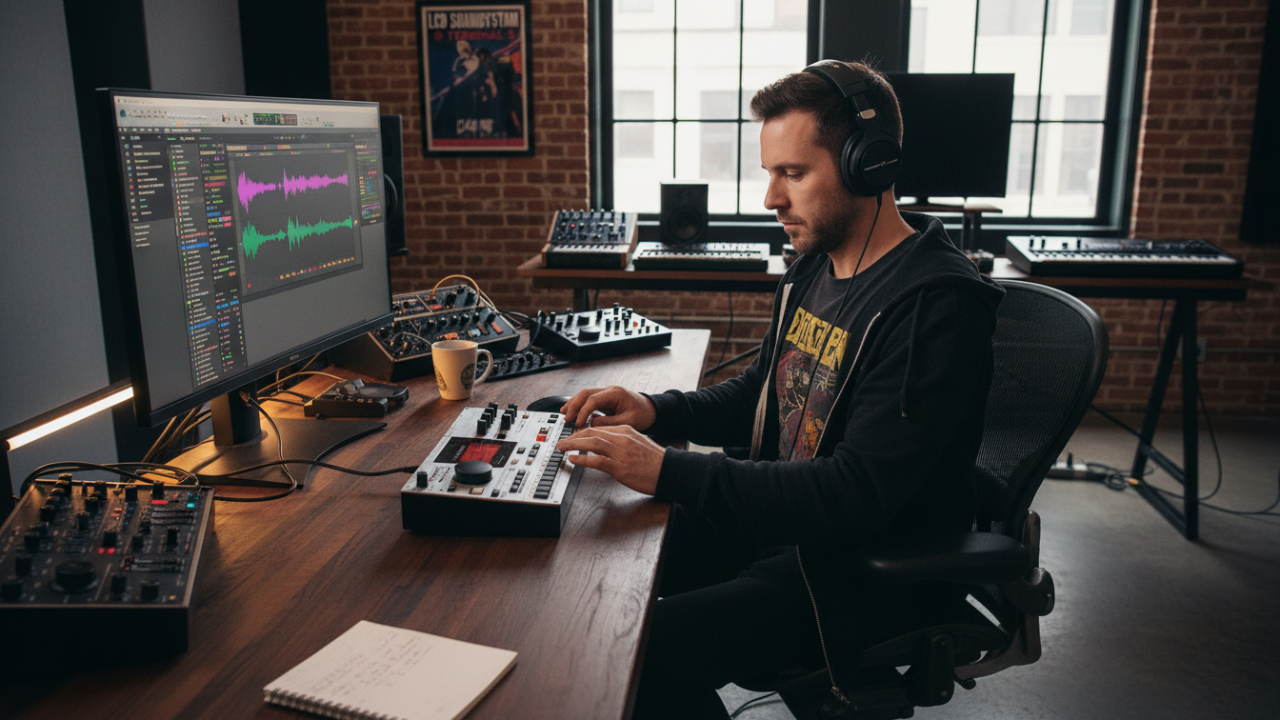
The Machine That Escaped the Future
The Elektron Machinedrum didn’t sound analog.
It didn’t sound vintage.
It didn’t sound like anything you recognized.
It sounded like the future breaking through a crack in the present.
Where classic drum machines created patterns…
the Machinedrum created worlds...

Your DAW Is Evolving
For decades, DAWs have done one main job:
Record.
Edit.
Mix.
The tools changed.
The workflows improved.
But the role of the DAW stayed mostly the same.
Ace Studio 2.0 represents something different.
It supercharges your DAW with new AI features —
It actively participates in ...